Reference · reference
Access and clearance
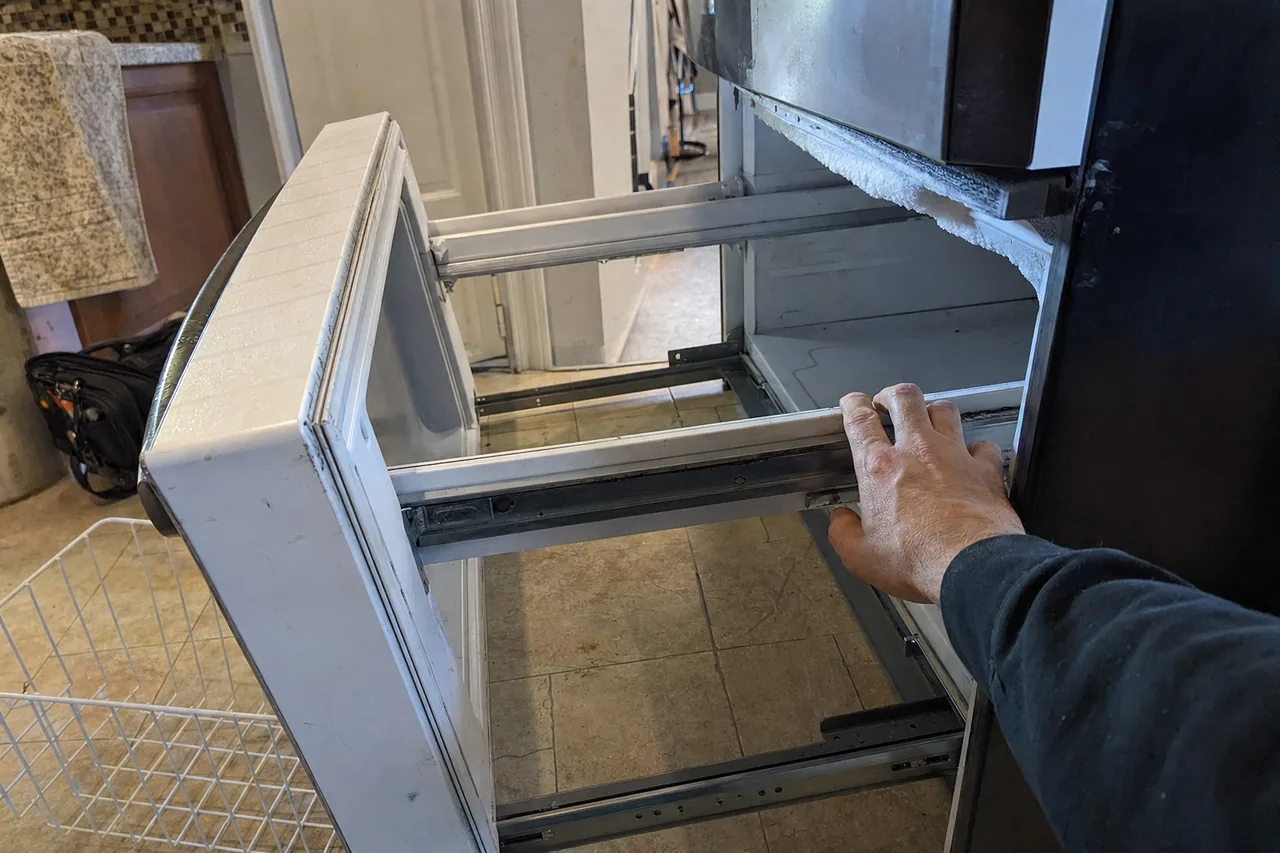
A freestanding appliance can be pulled into the room in a minute. A built-in appliance is part of the cabinetry, and getting at it is a planned part of the job rather than an afterthought. That difference explains a large share of what a service call on professional equipment actually costs, and it explains why some faults are diagnosed in the opening rather than in the machine.
The opening is a component
An appliance set into a cabinet has to reject heat, admit air, open its door and drain, all inside a space someone else built. Where any of those is compromised, the appliance behaves exactly as if a part had failed.
- Heat rejection. Undercounter refrigeration, wine storage and ice machines push condenser heat out through a front grille. A custom panel fitted flush, a decorative trim added later, or a toe kick set a little proud can close off a meaningful share of that free area. The unit runs hot, runs long, and its output falls season by season.
- Air in as well as out. A hood cannot exhaust air the house cannot replace. In a tight modern envelope that shows up as a fan that is quiet and moving nothing, and as exterior doors that pull harder while the hood is on high.
- Door swing. A refrigerator or oven door that fouls an adjacent cabinet, an island or a wall stops short. Every closing cycle then works the last part of the hinge travel, and the hinge fatigues years early.
- Drain fall. Ice machines and some refrigeration drain by gravity. A line kinked during a cabinet job, or run flat across a joist bay, backs up. The bin melts and refreezes into a sheet that gets mistaken for a freeze-cycle fault.
Coming out of the opening
Column refrigeration is heavy, tall and carried on rails or a set of anchors fixed to the cabinet structure. Bringing one forward is a two-person operation with flooring protection, and it is done when the diagnosis requires access to the rear, the condenser or the sealed system — not routinely. Panelled doors add weight at the worst possible radius, and a door removed for access has to go back on with its alignment reset, which is part of the labor and not an extra.
Wall ovens are set into a cabinet on a frame and are hard-wired. There is no plug to pull, so the isolation point is a breaker in the panel, and the unit comes forward on its own weight into a supported position. A single oven is manageable; a double oven in an upper opening is not something to attempt without proper support underneath it.
Undercounter equipment sits on a finished floor and often behind a toe kick that has to be removed cleanly. Where the floor was laid after the appliance was installed, the unit can be trapped by the flooring itself — a common find, and one worth knowing about before the visit rather than during it.
Connections we check before anything else
Electrical. Built-in ranges, ovens and cooktops generally take a dedicated circuit. A shared or undersized circuit shows up as nuisance tripping under load rather than as a fault in the appliance, and that is an electrician’s work, not ours.
Gas. A gas appliance has a shutoff behind or below it that has to be reachable. Where a cabinet job has buried it, that is worth correcting on its own merits.
Water and drain. Anything plumbed has a shutoff that ought to be reachable without emptying a cabinet, and a drain that has to keep fall. Both are checked at the start of a visit, because a supply or drain fault upstream of the machine mimics a fault inside it.
What this means for the visit
Tell us on the phone whether the unit is panelled, undercounter, in an island, or in an upper opening, and whether the floor was replaced after installation. That one answer determines how long the appointment needs and whether a second pair of hands has to come along. It is also the difference between a repair completed on the day and one that stops for want of access.
What does the work on this sheet cost before anyone has seen it?
Two figures decide this, and the schedule below carries both. The first is $80: a technician and a meter in front of the appliance, taken off the bill the moment you approve the repair. The second depends on which band the fault turns out to sit in — parts and labour counted together, this shop's book for St. Johns County, read off jobs of that class rather than off a manufacturer list.
| Band | Parts + labour | What lands in it |
|---|---|---|
| Diagnostic visit | $80 | Flat, credited to the repair when you approve it |
| Igniter or burner assembly | $190–$560 | igniter · ignitor · burner · flame |
| Oven thermostat or heating element | $190–$590 | oven · bake · broil · temperature |
| Control board or touch panel | $410–$1,030 | board · control · panel · touch |
| Refrigeration fan or defrost system | $240–$610 | refrigeration · fan · defrost · cooling |
| Dishwasher pump or control | $240–$690 | dishwash · pump · drain |
| Compressor or sealed-system repair | $940–$2,440 | compressor · sealed · refrigerant · freezer |
A written estimate comes before any part is ordered or any labor is billed. A band says where this class of work usually lands. It is not a quote, and three things move a job inside it: how the appliance has to be reached, whether the part is stocked or ordered, and whether the number on the plate has been superseded since. The full schedule and the terms sit on the pricing sheet.
Access and clearance — questions from the kitchen side
- Why does the cabinet opening count as a component?
- Because a built-in appliance has to reject heat, admit air, open its door and be reachable, and the opening decides all four. A unit that cannot breathe runs hot and long and reads as a failing machine. We check clearance, level and swing before anything is tested electrically.
- Does my appliance have to come out of the cabinetry?
- Only where the work is behind it. Columns and undercounter units come forward on rails and are heavy enough that pulling one is a planned operation rather than a shove, so it helps to know on the phone whether the flooring went down after the appliance did.
- Which connections get checked before a component is condemned?
- The ones feeding the appliance: the dedicated circuit and its breaker on a hard-wired unit, the gas connection where there is one, the supply and the drain fall on anything plumbed, and the duct diameter and run behind a hood. A component tested against a bad supply reads the wrong situation honestly.
Visits where this sheet decided the answer
Each slip below is one visit, in the words of the person who paid for it. The awkward ones are printed with the rest. More from the 78 we publish.
Self clean would not start and the oven threw a lock error at us. He rebuilt the latch mechanism and fitted a new motor, and the cycle runs. The first appointment had to be moved, which was the only sore point.
Barnaby T.2026-03-02
Ice maker had been fusing cubes into a sheet for ages. He traced it to an inlet valve that was no longer seating and changed it. Fine work, though I waited longer than I expected for the part to land.
Octavia N.2026-03-05
The oven had run nearly forty degrees cool for years and we had just learned to live with it. He measured at three points with the cavity settled, adjusted the offset and verified with a second bake.
Cecilia R.2026-05-22
Where this sheet is used
A site-wide reference: every service page on the site works against it.
Viking kitchen appliances — and nothing mechanical in the house
Greenleaf Appliance Service repairs built-in kitchen appliances — the Viking equipment specified into a kitchen and installed in it, plus the outdoor cooking equipment that was specified with it. Home heating, air conditioning, heat pumps, air handlers and the ductwork that serves them are not work this shop takes, in Nocatee or anywhere else inside the radius. A hood duct, a condenser air path and the cooling load on a built-in are appliance work and we measure all three; the house's own mechanical systems belong to a mechanical contractor.
Viking on this site is the kitchen-appliance manufacturer. There is also a place called Viking in Indian River County, well south of St. Johns County; this shop does not work there, and it does not service heating or cooling equipment anywhere.
On the sheet
- Ranges, rangetops and cooktops
- Wall ovens, single and double
- Built-in and freestanding refrigeration
- Undercounter ice machines
- Dishwashers
- Range hoods and their blowers
- Outdoor cooking equipment specified with the kitchen
Off the sheet
- Home heating and furnaces
- Central air conditioning and heat pumps
- Air handlers and house ductwork
- Water heaters and pool equipment
- Laundry equipment