Service · refrigeration
Refrigerator repair — warm or frost
Built-in and freestanding Viking refrigeration that drifts warm, frosts over, runs constantly or floods the floor — diagnosed against target temperatures rather than the door display.
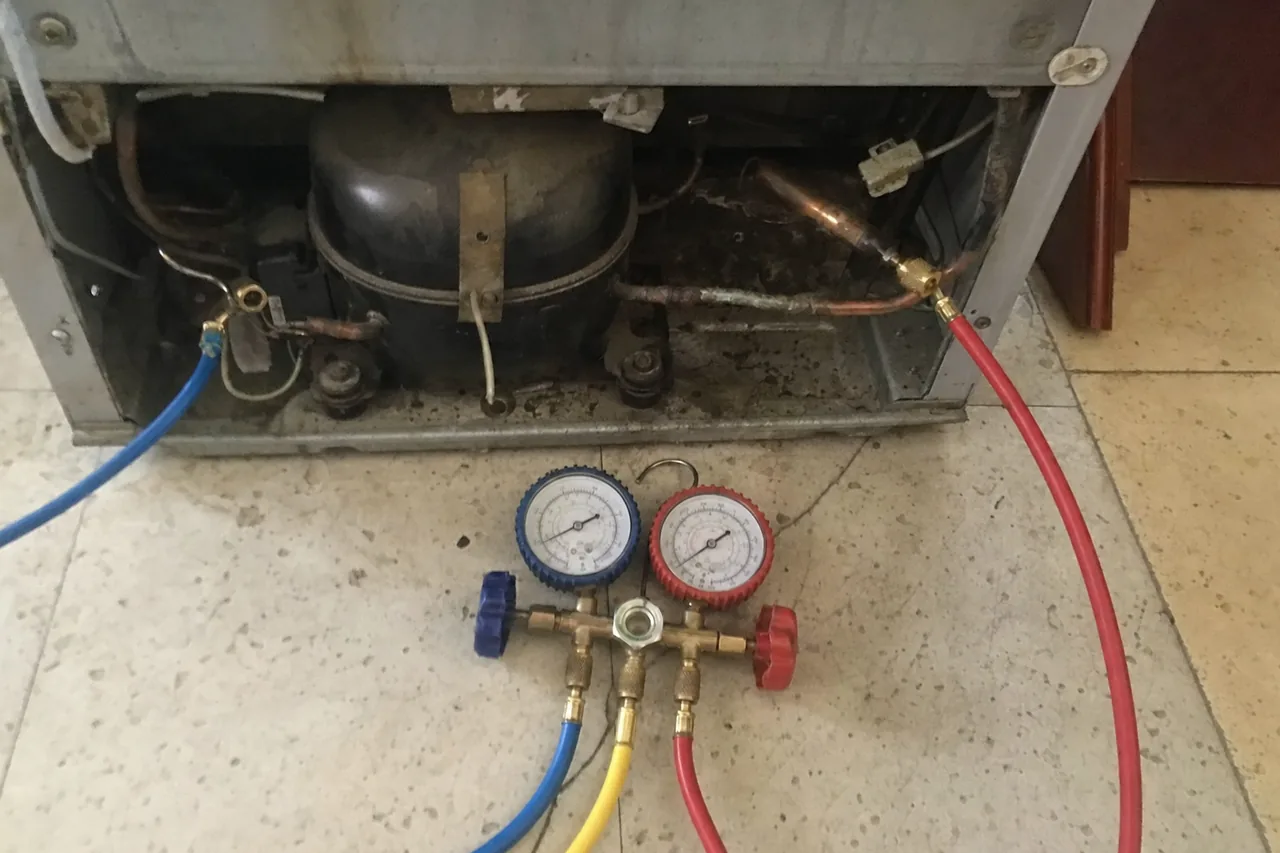
Refrigeration is the one appliance in the kitchen that never gets a night off. A built-in unit runs a duty cycle every hour of every day for a decade, which is why the failures are so predictable and why the early symptoms are so worth catching.
Warm fresh food, cold freezer
This is the most common call we take, and it is almost never a refrigerant problem. On a unit that cools both compartments from one evaporator, the cold air is moved to the fresh food side by a fan and metered by a damper. If the evaporator has frosted over, if the fan has seized, or if the damper has stuck closed, the freezer still gets its cold and the fresh food side slowly warms. The compressor is fine. The system is fine. The air path is not.
The diagnostic is straightforward: measure both compartments, listen for the evaporator fan with the door switch defeated, and look at the evaporator itself. A uniform light frost is normal. A solid white slab is a defrost failure, and defrost failures come from one of three parts — heater, thermostat or control — that can be tested individually in a few minutes.
Sealed systems and who may open them
Opening a sealed refrigeration system to recover, evacuate or charge refrigerant requires EPA Section 608 certification. Our technicians hold it. That matters practically as well as legally, because a system that has been opened by someone without recovery equipment usually comes back with moisture in it, and moisture in a capillary system is a far worse problem than the leak that started it.
We do not guess at charge. If the evidence points at the sealed system, that gets said plainly, along with what it costs and whether the repair is worth it against the age of the unit.
The ice and water circuit
The ice supply is a small system bolted onto a large one, and it fails on its own schedule. Water enters through a single inlet valve, passes to the mould or the dispenser line, and everything downstream depends on that valve metering a consistent charge and then closing completely. A valve that no longer seats cleanly overfills, which shows up first as cubes fused into a sheet, then as ice sheeting over the ejector, then as water where it should not be.
The sequence matters more than any single symptom. Ice that degraded gradually over months is a mechanical, water-path problem and the fix is mechanical. Ice that stopped in a single evening is electrical: the mould heater, the ejector motor, the bin level arm or sensor, or the control that commands the harvest. A dispenser that dribbles rather than pours points at the valve, the line, or a frozen fill tube — and a fill tube that freezes repeatedly is telling you about the compartment temperature, not about the ice maker.
Where a filter is fitted, it is worth confirming that it is the right one, that it is seated, and that it has been changed within the interval printed on it. A filter improves taste and removes particulate; it does not change anything mechanical, and a bypass plug left in place after a change is a common find.
Gaskets, hinges and the weight of a built-in door
A full-height built-in door with a custom panel on it is heavy, and it hangs on hinges that were set at installation and rarely touched since. When the door stops pulling itself the last inch closed, the seal breaks contact at the top, warm humid air enters continuously, and everything downstream gets worse: compressor run time climbs, frost builds faster, and the fresh food side drifts.
Florida humidity makes this failure louder than it would be in a dry climate. A gasket that would be a minor annoyance in Denver is a compressor working overtime in St. Johns County in August.
Condensers and the six-month rule
The condenser rejects heat, and it can only do that if air moves through it. Pet hair, dust and construction fines pack the fins and the fan guard until the system runs hot, runs long and eventually protects itself. We clean the coil and the fan on every refrigeration call and recommend a six-month interval in homes with pets, twelve months without.
What the visit includes
A flat diagnostic, credited toward the repair when you approve it, and a written estimate before any part is ordered or any labor is billed. Genuine OEM parts only, with our standard parts and labor terms.
What does a refrigerator repair — warm or frost cost before anyone has seen it?
Two figures decide this, and the schedule below carries both. The first is $80: a technician and a meter in front of the appliance, taken off the bill the moment you approve the repair. The second depends on which band the fault turns out to sit in — parts and labour counted together, this shop's book for St. Johns County, read off jobs of that class rather than off a manufacturer list.
| Band | Parts + labour | What lands in it |
|---|---|---|
| Diagnostic visit | $80 | Flat, credited to the repair when you approve it |
| Refrigeration fan or defrost system | $240–$610 | refrigeration · fan · defrost · cooling |
| Compressor or sealed-system repair | $940–$2,440 | compressor · sealed · refrigerant · freezer |
| Control board or touch panel | $410–$1,030 | board · control · panel · touch |
A written estimate comes before any part is ordered or any labor is billed. A band says where this class of work usually lands. It is not a quote, and three things move a job inside it: how the appliance has to be reached, whether the part is stocked or ordered, and whether the number on the plate has been superseded since. The full schedule and the terms sit on the pricing sheet.
Refrigerator repair — warm or frost — the questions that come up on the phone
- The freezer is cold but the fresh food side is warm. Is the refrigerant low?
- Almost never. On a cabinet cooled from one evaporator the cold is moved to the fresh food side by a fan and metered by a damper. A frosted evaporator, a seized fan or a stuck damper breaks that air path while the sealed system carries on working perfectly.
- Who is allowed to open a sealed refrigeration system?
- Recovering, evacuating or charging refrigerant requires EPA Section 608 certification, and our technicians hold it. That matters practically as well as legally: a circuit opened without recovery equipment usually comes back with moisture in it, which is a worse problem than the leak that started it.
- How often does a built-in condenser really need cleaning?
- Six months in a house with pets, twelve without. The condenser can only reject heat if air moves through it, and pet hair, dust and construction fines pack the fins until the unit runs hot, runs long and eventually protects itself. We clean it on every refrigeration call.
- What does a Viking refrigerator repair cost in Nocatee?
- A box drifting warm is usually air movement or defrost; one that runs without cooling at all is the sealed circuit. On this book that is refrigeration fan or defrost system $240–$610, compressor or sealed-system repair $940–$2,440, control board or touch panel $410–$1,030, on top of the $80 diagnostic, credited back when you approve the work.
What owners said after refrigerator repair — warm or frost
Each slip below is one visit, in the words of the person who paid for it. The awkward ones are printed with the rest. More from the 78 we publish.
Wine storage was running warm in the lower zone only. Behind the panel he found the second evaporator iced solid and a fan that had stopped turning. He cleared it, fitted a fan, and both zones hold now.
Malik H.2026-07-24
The compressor ran all day and never satisfied. He put gauges on it, showed me the low side reading and traced a restriction rather than guessing at a leak. It is cycling normally again and the bill matched the estimate.
Noelle T.2026-03-08
The repair itself has held up fine. What I did not appreciate was being told the cabinet would be moved back into place and then finding the panel left leaning against the island for me to deal with.
Alastair M.2026-06-14
Reference sheets
Tolerances and intervals this page measures against, refrigeration first.
Other equipment we service
Viking only, across the whole suite.
Viking kitchen appliances — and nothing mechanical in the house
Greenleaf Appliance Service repairs built-in kitchen appliances — the Viking equipment specified into a kitchen and installed in it, plus the outdoor cooking equipment that was specified with it. Home heating, air conditioning, heat pumps, air handlers and the ductwork that serves them are not work this shop takes, in Nocatee or anywhere else inside the radius. A hood duct, a condenser air path and the cooling load on a built-in are appliance work and we measure all three; the house's own mechanical systems belong to a mechanical contractor.
Viking on this site is the kitchen-appliance manufacturer. There is also a place called Viking in Indian River County, well south of St. Johns County; this shop does not work there, and it does not service heating or cooling equipment anywhere.
On the sheet
- Ranges, rangetops and cooktops
- Wall ovens, single and double
- Built-in and freestanding refrigeration
- Undercounter ice machines
- Dishwashers
- Range hoods and their blowers
- Outdoor cooking equipment specified with the kitchen
Off the sheet
- Home heating and furnaces
- Central air conditioning and heat pumps
- Air handlers and house ductwork
- Water heaters and pool equipment
- Laundry equipment