Reference · reference
Refrigeration targets
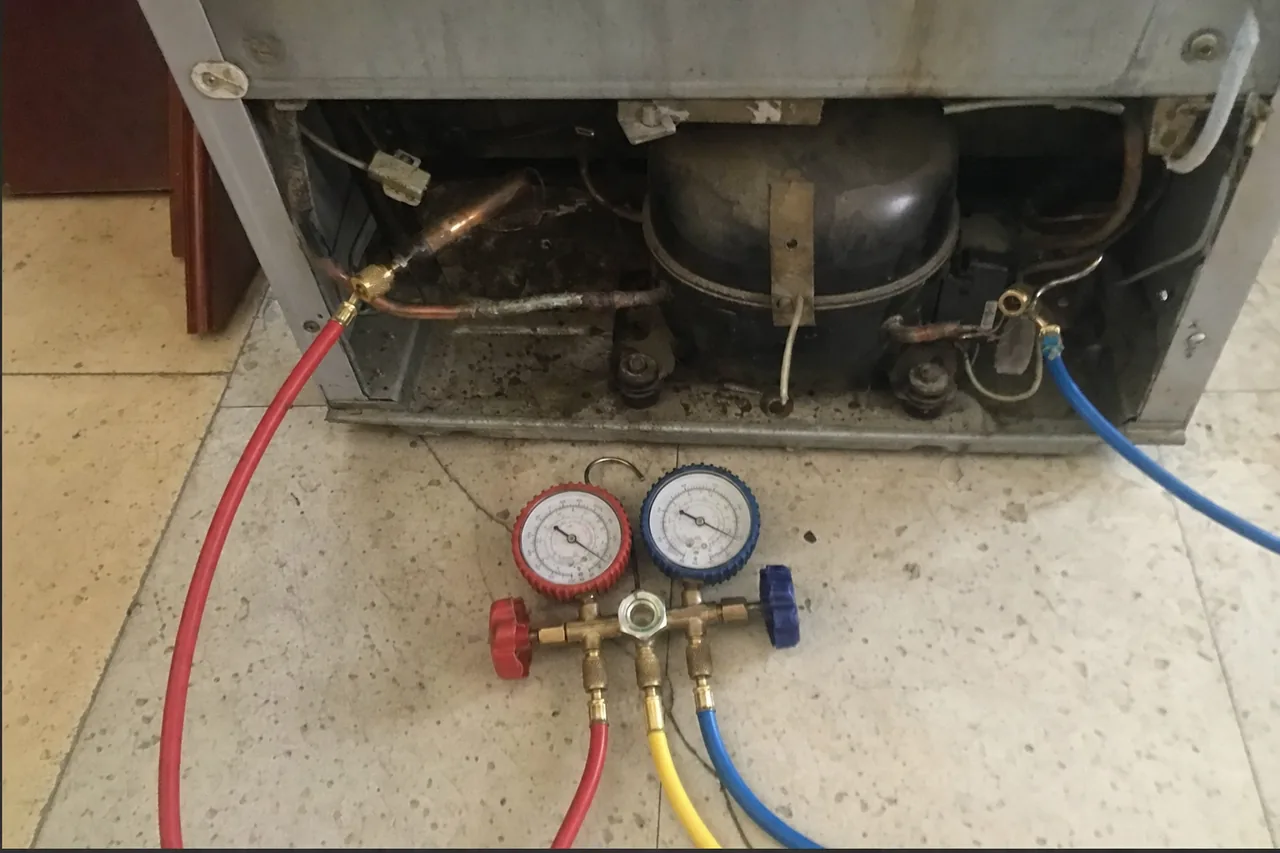
Refrigeration complaints are unusual among appliance faults because the symptom is a number, and the number is easy to get wrong. Most of the “my refrigerator is too warm” calls we take begin with a reading taken the wrong way.
Measure it properly or do not measure it
Air temperature inside a compartment swings every time the door opens and every time the compressor cycles. A thermometer sitting on a shelf reads that swing, not the temperature your food is at.
The honest method is to put a thermometer in a glass of water, place it at mid-shelf in the fresh food compartment, close the door, and leave it for at least four hours — overnight is better. Water has enough thermal mass to average the swing, which is exactly what the food in the compartment is doing. For the freezer, place the thermometer between packages rather than in open air.
Then compare against 37°F fresh food and 0°F freezer. Those are the targets we set to. The number that actually matters for safety is the 40°F ceiling in standard food-safety guidance; 37°F is chosen to leave margin for door openings and for the warm spots any real compartment has.
The diagnostic table
| Fresh food | Freezer | What it usually means |
|---|---|---|
| Warm | Cold | Air path: evaporator frosted, evaporator fan, or damper |
| Warm | Warm | Sealed system, condenser, condenser fan, or a control fault |
| Cold | Warm | Rare; usually a control or a sensor reading wrong |
| Correct, but runs constantly | Correct | Heat load: door seal, condenser fouling, or ambient |
| Swings widely | Correct | Sensor, damper, or a door that is not sealing |
The first row is the most common call we take, and it is the one people most often assume is a refrigerant problem. It usually is not. On a system that cools both compartments from one evaporator, the freezer gets its cold directly and the fresh food side gets it second-hand through a fan and a damper. Break the air path and the freezer stays fine while the fresh food side drifts. The compressor is innocent.
What a frost slab tells you
A light, even frost on an evaporator is normal. A solid white slab across the coil is a defrost failure, and defrost failures come from a short list — heater, defrost thermostat or limit, and the control that commands the cycle. Each can be tested individually. The slab itself blocks airflow, which is why the fresh food side warms.
Florida humidity accelerates this. Every door opening admits moist air, and every gram of that moisture ends up on the evaporator waiting to be removed. A defrost system that would cope in a dry climate is working near its limit here, which is why a marginal gasket produces a real fault in St. Johns County and merely an inefficiency somewhere drier.
Give it a day
After any adjustment, a refrigerator needs about 24 hours to settle. Changing a setting and re-reading an hour later tells you nothing, and chasing the setting up and down over an afternoon is the fastest way to convince yourself an appliance is broken when it is stabilising.
Condensers and run time
A refrigerator that holds temperature but never stops running is not yet failing — it is telling you it is close to its limit. The usual causes are a fouled condenser, a condenser fan that has slowed or seized, a door gasket admitting warm air continuously, or a garage installation asked to work in ambient temperatures it was not designed for. Clean the coil and the fan on a six-month cycle in a house with pets, twelve months without.
Who may open a sealed system
Recovering, evacuating or charging refrigerant requires EPA Section 608 certification. Our technicians hold it. That is not a formality: a system opened without proper recovery and evacuation takes on moisture, and moisture in a capillary system creates a restriction problem that is worse than the original leak. If the evidence points at the sealed system, we say so plainly, with the cost and an honest opinion on whether it is worth doing against the age of the unit.
What does the work on this sheet cost before anyone has seen it?
Two figures decide this, and the schedule below carries both. The first is $80: a technician and a meter in front of the appliance, taken off the bill the moment you approve the repair. The second depends on which band the fault turns out to sit in — parts and labour counted together, this shop's book for St. Johns County, read off jobs of that class rather than off a manufacturer list.
| Band | Parts + labour | What lands in it |
|---|---|---|
| Diagnostic visit | $80 | Flat, credited to the repair when you approve it |
| Refrigeration fan or defrost system | $240–$610 | refrigeration · fan · defrost · cooling |
| Compressor or sealed-system repair | $940–$2,440 | compressor · sealed · refrigerant · freezer |
A written estimate comes before any part is ordered or any labor is billed. A band says where this class of work usually lands. It is not a quote, and three things move a job inside it: how the appliance has to be reached, whether the part is stocked or ordered, and whether the number on the plate has been superseded since. The full schedule and the terms sit on the pricing sheet.
Refrigeration targets — questions from the kitchen side
- How should the temperature actually be taken?
- Not off the display. A thermometer goes into a glass of water in the fresh food compartment and between packages in the freezer, and the cabinet is left alone long enough to settle before anything is written down. Air temperature at an open door is not a measurement.
- How long after a power cut before I can judge it?
- A full twenty-four hours. Expect a three to five minute delay before the compressor restarts while pressures equalise, and expect the cabinet to take the rest of the day to pull down. Judging it the same evening produces a service call the appliance did not need.
- What does a solid slab of frost on the evaporator tell you?
- That defrost has stopped, not that refrigerant is low. A uniform light frost is normal; a white slab blocks the air path, so the freezer stays cold while the fresh food side drifts warm. Heater, thermostat and control are three parts that each test in minutes.
Visits where this sheet decided the answer
Each slip below is one visit, in the words of the person who paid for it. The awkward ones are printed with the rest. More from the 78 we publish.
The top rack came out gritty every time. He held the upper arm up to the light, found four jets blocked solid and cleared them, then showed me how a sheet pan on the lower rack shadows the whole arm.
Leopold O.2026-09-05
The range works properly now and the diagnosis was careful, but the scheduling was a mess. Two appointments were moved before anyone arrived, and I only heard about the second one because I chased it.
Katya S.2025-09-27
Makeup air was so poor that the hood pulled the back door shut on its own. He measured it, explained why the kitchen was being starved, and adjusted the setup rather than selling us a bigger blower.
Adrienne V.2026-01-03
Where this sheet is used
Service pages that measure against these figures.
Viking kitchen appliances — and nothing mechanical in the house
Greenleaf Appliance Service repairs built-in kitchen appliances — the Viking equipment specified into a kitchen and installed in it, plus the outdoor cooking equipment that was specified with it. Home heating, air conditioning, heat pumps, air handlers and the ductwork that serves them are not work this shop takes, in Nocatee or anywhere else inside the radius. A hood duct, a condenser air path and the cooling load on a built-in are appliance work and we measure all three; the house's own mechanical systems belong to a mechanical contractor.
Viking on this site is the kitchen-appliance manufacturer. There is also a place called Viking in Indian River County, well south of St. Johns County; this shop does not work there, and it does not service heating or cooling equipment anywhere.
On the sheet
- Ranges, rangetops and cooktops
- Wall ovens, single and double
- Built-in and freestanding refrigeration
- Undercounter ice machines
- Dishwashers
- Range hoods and their blowers
- Outdoor cooking equipment specified with the kitchen
Off the sheet
- Home heating and furnaces
- Central air conditioning and heat pumps
- Air handlers and house ductwork
- Water heaters and pool equipment
- Laundry equipment