Village · 32081
Twenty Mile — a cooking-appliance cohort aging together
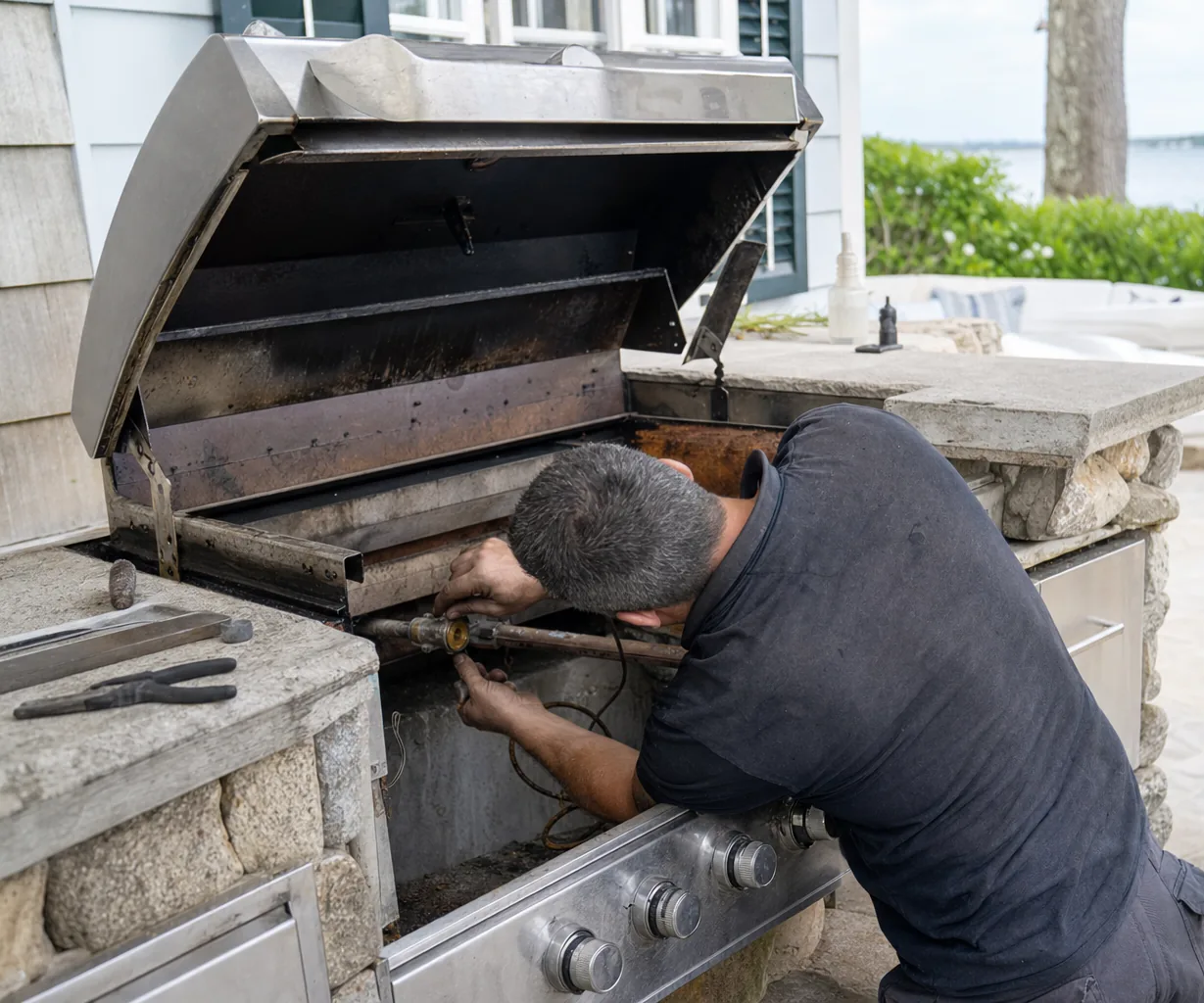
Twenty Mile is one of the larger established neighbourhoods inside Nocatee, and its appliance profile reflects that: a wide mix of house sizes, a narrow mix of appliance vintages. Almost everything cooking in these kitchens went in with the house, which means the population of professional ranges and wall ovens here is aging as one group rather than one at a time.
The cohort effect, and why your neighbour called us last month
Appliances installed together fail together. Not on the same day, but inside the same two or three seasons, because they share a manufacturing window, a duty cycle and an environment. In a neighbourhood built out over a handful of years, that produces a pattern we can predict: igniters first, then oven sensors and calibration drift, then door hinges and gaskets, then control boards.
That is why the same three parts come up repeatedly on the same street, and why we can often tell you what is likely wrong before the truck arrives. It is also why “it was fine last year” is not evidence of anything — the whole cohort was fine last year.
Cooking appliances dominate the call sheet here
In parts of Nocatee where kitchens carry full built-in refrigeration suites and undercounter ice, most of what we do is refrigeration work. In Twenty Mile the balance tips the other way: the majority of calls are ranges and wall ovens, and those are heat, gas and control problems.
That changes how a visit runs. An oven complaint is measured before it is diagnosed — thermometer at the centre of the middle rack, twenty minutes past the preheat tone, then readings across three full element cycles. The average and the swing are two different numbers and they point at two different faults. An average that is consistently low with a tight swing is sensor drift or a calibration offset. A correct average with a wide swing is the control or the element behaviour. A cavity that climbs, stalls and never arrives is losing heat through a door seal or a sagged hinge, and no offset will fix that — it will simply hide the fault at one setpoint and make it worse at every other.
Range faults divide almost as cleanly. Clicking with no light is the igniter circuit or a wet electrode; a burner that lights and then drops out is flame supervision; a flame that lifts or runs uneven after a cleaning is usually a burner cap seated slightly out of position rather than a gas problem at all.
What “past warranty” changes about the conversation
A builder-installed professional range in this neighbourhood is comfortably past any manufacturer coverage. That changes the decision in front of you from “who fixes it” to “is it worth fixing”, and that question deserves a real answer rather than a sales pitch.
Our position is straightforward. A sensor, an igniter, a hinge kit, a gasket, a spark module, a fan motor — all of those are worth doing on an appliance of this age, because the rest of the machine is heavy, well made and nowhere near finished. A failed control board on a unit that has already had two other failures is a different arithmetic, and a sealed-system repair on a refrigerator past a certain age is a different one again. You get the numbers and the reasoning; the decision is yours.
Getting the parts right
The single most useful thing you can do before we arrive is find the data plate and photograph it. On a range it is usually behind the kick panel or on the frame behind the door; on a wall oven, on the frame at the side of the opening. Professional appliances went through running changes, so two units that look identical from the front can take different sensors, different igniters and different hinge kits. A model and serial number turns a two-visit repair into a one-visit repair more often than anything else we do.
We order genuine OEM parts against that plate, not against a photograph of the front of the appliance.
Scheduling and access
We work Monday to Friday and Saturday mornings, and we do not advertise emergency service, because a service call rushed at nine at night is a service call done badly. Twenty Mile is a short drive from the rest of Nocatee, so we can usually consolidate a parts return visit into the same week rather than the next one.
Every visit starts with a flat diagnostic, credited toward the repair when you approve the work, and nothing is ordered or billed before you have a written estimate in hand.
What does a Viking repair in Twenty Mile cost before anyone has seen it?
Two figures decide this, and the schedule below carries both. The first is $80: a technician and a meter in front of the appliance, taken off the bill the moment you approve the repair. The second depends on which band the fault turns out to sit in — parts and labour counted together, this shop's book for St. Johns County, read off jobs of that class rather than off a manufacturer list.
| Band | Parts + labour | What lands in it |
|---|---|---|
| Diagnostic visit | $80 | Flat, credited to the repair when you approve it |
| Igniter or burner assembly | $190–$560 | igniter · ignitor · burner · flame |
| Oven thermostat or heating element | $190–$590 | oven · bake · broil · temperature |
| Control board or touch panel | $410–$1,030 | board · control · panel · touch |
| Refrigeration fan or defrost system | $240–$610 | refrigeration · fan · defrost · cooling |
| Dishwasher pump or control | $240–$690 | dishwash · pump · drain |
| Compressor or sealed-system repair | $940–$2,440 | compressor · sealed · refrigerant · freezer |
A written estimate comes before any part is ordered or any labor is billed. A band says where this class of work usually lands. It is not a quote, and three things move a job inside it: how the appliance has to be reached, whether the part is stocked or ordered, and whether the number on the plate has been superseded since. The full schedule and the terms sit on the pricing sheet.
Twenty Mile — what we get asked before the van is booked
- My neighbour had the same fault last month. Coincidence?
- No, it is the cohort. These kitchens were fitted by the builder within a few years of one another, so they reach the same wear items at roughly the same time. When one street starts losing igniters or ice makers, the houses either side are usually a season behind.
- What changes once the appliance is past its own coverage?
- The conversation, not the work. Past any manufacturer coverage you are choosing between a repair figure and a replacement figure with your own money, so we put both in front of you in writing rather than assuming which one you wanted to hear.
- Why do cooking appliances dominate your call sheet in Twenty Mile?
- Because that is what these kitchens were specified with and that is what gets used hardest here. Burner, igniter, calibration and door-seal work make up most of what we book in this village, and the parts involved are mostly consumables rather than electronics.
What owners in Twenty Mile said afterwards
Each slip below is one visit, in the words of the person who paid for it. The awkward ones are printed with the rest. More from the 78 we publish.
The simmer would not hold on the front burner and always dropped out after ten minutes. He set it low, put a pan of water on it and left it a full twenty minutes before calling it fixed.
Solomon E.2026-03-14
Convection browned everything at the front and nothing at the back. He found the rear baffle refitted with the wrong clearance after a deep clean, put it back properly and it cooks evenly again.
Winifred D.2026-05-29
The hood had lost most of its pull. Filters were loaded and the wheel was caked, and cleaning both brought it back without a new motor. He was straight about the duct being the next limit if I want more.
Serena Q.2026-08-20
Viking kitchen equipment we work on in Twenty Mile
Viking equipment only, and kitchen equipment only. Same terms and the same diagnostic everywhere in the village.
Nearby villages
Same ZIP in most cases, different housing stock and a different appliance mix.
Viking kitchen appliances — and nothing mechanical in the house
Greenleaf Appliance Service repairs built-in kitchen appliances — the Viking equipment specified into a kitchen and installed in it, plus the outdoor cooking equipment that was specified with it. Home heating, air conditioning, heat pumps, air handlers and the ductwork that serves them are not work this shop takes, in Nocatee or anywhere else inside the radius. A hood duct, a condenser air path and the cooling load on a built-in are appliance work and we measure all three; the house's own mechanical systems belong to a mechanical contractor.
Viking on this site is the kitchen-appliance manufacturer. There is also a place called Viking in Indian River County, well south of St. Johns County; this shop does not work there, and it does not service heating or cooling equipment anywhere.
On the sheet
- Ranges, rangetops and cooktops
- Wall ovens, single and double
- Built-in and freestanding refrigeration
- Undercounter ice machines
- Dishwashers
- Range hoods and their blowers
- Outdoor cooking equipment specified with the kitchen
Off the sheet
- Home heating and furnaces
- Central air conditioning and heat pumps
- Air handlers and house ductwork
- Water heaters and pool equipment
- Laundry equipment